
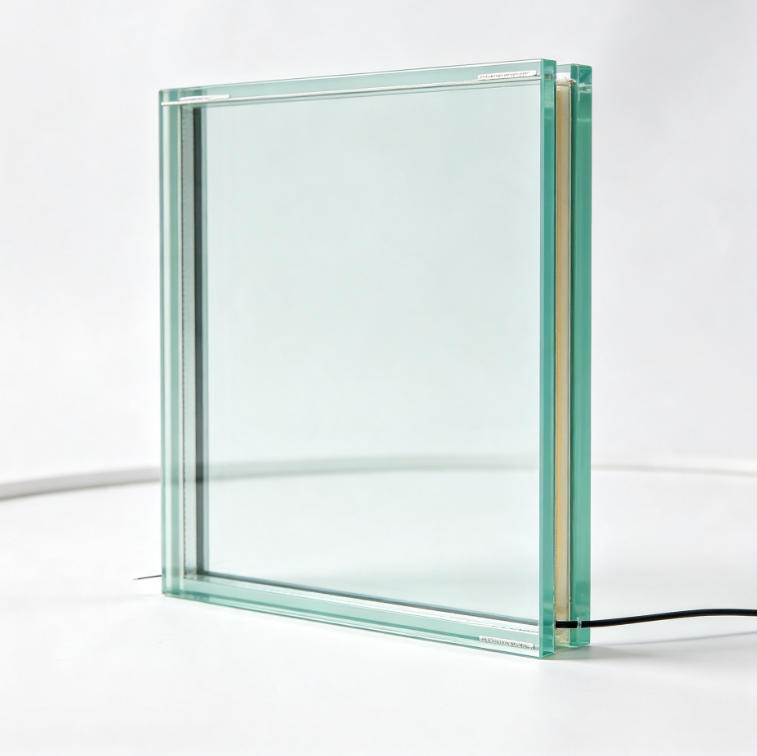
Custom heated glass and Low-E IGUs for cold display doors
This line is cut-to-drawing glass, not a finished cabinet and not a stock window pane. We produce electrically heated glass and Low-E insulated glass units for commercial cooler doors, smart vending leaves, wine cabinets, and freezer lids. The shopper sees a clear face. The box keeps its set point. You send the lite size, coating face, voltage, and whether you need a single pane heater or a full argon IGU; we build a first article, then the production lot.
Buyers searching for heated cooler glass, anti-fog Low-E IGU, or custom energy-saving display glass use this category when the frame is already tooled and the glass is the energy and dew part. For a complete leaf see energy-efficient insulated door assemblies. For a vendor or wine leaf already hung as a door see smart vending door assemblies and beverage and wine cabinet doors.
Two tools, one custom lite: heat and Low-E
Low-E is a thin metal-oxide coating that reflects far-infrared heat. In a hollow unit (中空玻璃) it sits toward the cavity, usually with argon, so less heat soaks into a 0–8 °C merchandiser and less cold radiates onto the shop-side pane. That is the energy story: fewer compressor starts, less load on the gasket. See low-emissivity coating — it is not a stick-on window film.
Heated glass is a transparent conductive layer (often called EC or ITO-type) with silk-screen silver busbars and flying leads. A low current warms the pane just enough to stay above the dew point. Typical design density is about 40–90 W/m²; voltage is whatever your door harness already uses — 24 V, 36 V, 48 V DC, or 110–240 V AC. Heat stops fog. It is not a room heater and it is not a substitute for a sealed IGU. The usual high-humidity recipe is Low-E argon IGU plus a heated lite or a heated frame.
An insulated glazing unit is still the thermal box: two or three tempered panes, warm-edge spacer, dual seal. We will not “add Low-E” to a single unsealed sheet and call it an energy door. Freezer lids and −18 °C reach-ins generally need triple pane and/or higher watt density. Wine and cigar display usually need Low-E and UV, not heat, unless the room is wet.
Custom production — what we freeze on the PO
Lite geometry. Width × height, thickness, stepped or flush edge, corner radius, hole and notch map for hinges and locks. Tolerance class for door lines, not for picture frames.
Coating and stack. Low-E face (#2 or #3), extra-clear or tinted, UV interlayer if specified. Heated coating on the pane that actually dews. Double-pane cooler stack typically 3.2/4 + 12–16 mm + 3.2/4 mm, argon on request. Triple pane for freezer or tropical stores.
Electrical. Voltage, target W/m², busbar layout (top/bottom or sides), lead length and connector, insulation class, and whether the heater is series-safe for a wet gasket. We stamp the rating on the frit, not on a paper sticker that washes off.
Process. Drawing or sample lite → coating and watt-density calc → first-article IGU or heated pane → dew test on a cold box if you send setpoint and RH → batch. MOQ follows silk-screen and odd shapes. We do not drop a wine-bar clear IGU into a freezer heated-glass PO to save a week.
Where the glass is used
Upright beverage coolers, glass-front smart vendors, supermarket reach-ins, display freezers, back-bar and wine doors in humid kitchens, and any OEM door whose energy or anti-fog test is failing on the lite. Indoor commercial is default. Sun-facing glass needs Low-E solar control called out on the inquiry, not guessed after install.
Typical specifications (custom; confirm on the GA)
| Item | Specification |
|---|---|
| Product | Custom heated glass and Low-E insulated glass units |
| Forms | Heated monolithic lite; Low-E IGU; heated + Low-E IGU |
| Glass | Tempered; extra-clear or tinted; UV optional |
| Typical IGU | 3.2/4 mm + 12–16 mm spacer + 3.2/4 mm; argon optional |
| Heater | Transparent conductive coat, silk-screen busbars, flying leads |
| Electrical (typical) | 24 / 36 / 48 V DC or 110–240 V AC; about 40–90 W/m² |
| Duty | Cooler / vendor ~0–8 °C; wine ~8–14 °C; freezer on triple/heated stack |
| Edge | Flush or step; frit and logo silk-screen |
| Options | Krypton fill, heated frame bus only, holes/notches, connector type |
| Production | OEM / ODM from drawing or sample; first article then batch |
Send lite size, setpoint, RH, voltage, coating face, and a door sketch to the custom glass desk. We will reply with a stack, a watt-density, and a first-article date.
How to write the custom PO
State: custom heated and/or Low-E insulated glass; voltage and W/m² if heated; IGU or monolithic; W × H × thickness; coating face; quantity. Attach the lite drawing. Do not write only the category name “Heating & Low-E Glass Solutions” on the PO — name the stack. Do not order “anti-fog spray glass” or untreated single pane as a substitute.
Questions OEM buyers ask
Heated glass, Low-E, or both?
Low-E + argon is the energy upgrade. Heated glass is the anti-fog upgrade. Humid drink doors and open kitchens usually need both. Dry, mild wine rooms often need Low-E and UV only.
Will heat replace a good gasket?
No. Heat clears the pane. A leaking rebate still ices the frame and still runs the compressor. Fix the seal; size the heater for dew, not for a warped door.
Can you match our old lite?
Yes. One sample pane or a full size / busbar / lead photo pack is enough to reverse-build. We match voltage first, then ohms and W/m².
Glass only or in a door?
This category is glass. We can bond the lite into an insulated door assembly on the same order if you want one PO.
Sample path?
One paid first-article lite, your dew and amp draw test on a live cabinet, then production. Custom frit and odd notches always go through that sample.